Bleaching – Whiter teeth

Professional, safe teeth whitening

If a dental hygiene session is not sufficient, discolored teeth can be professionally and gently lightened using bleaching procedures.

Procedure for “Home Bleaching”

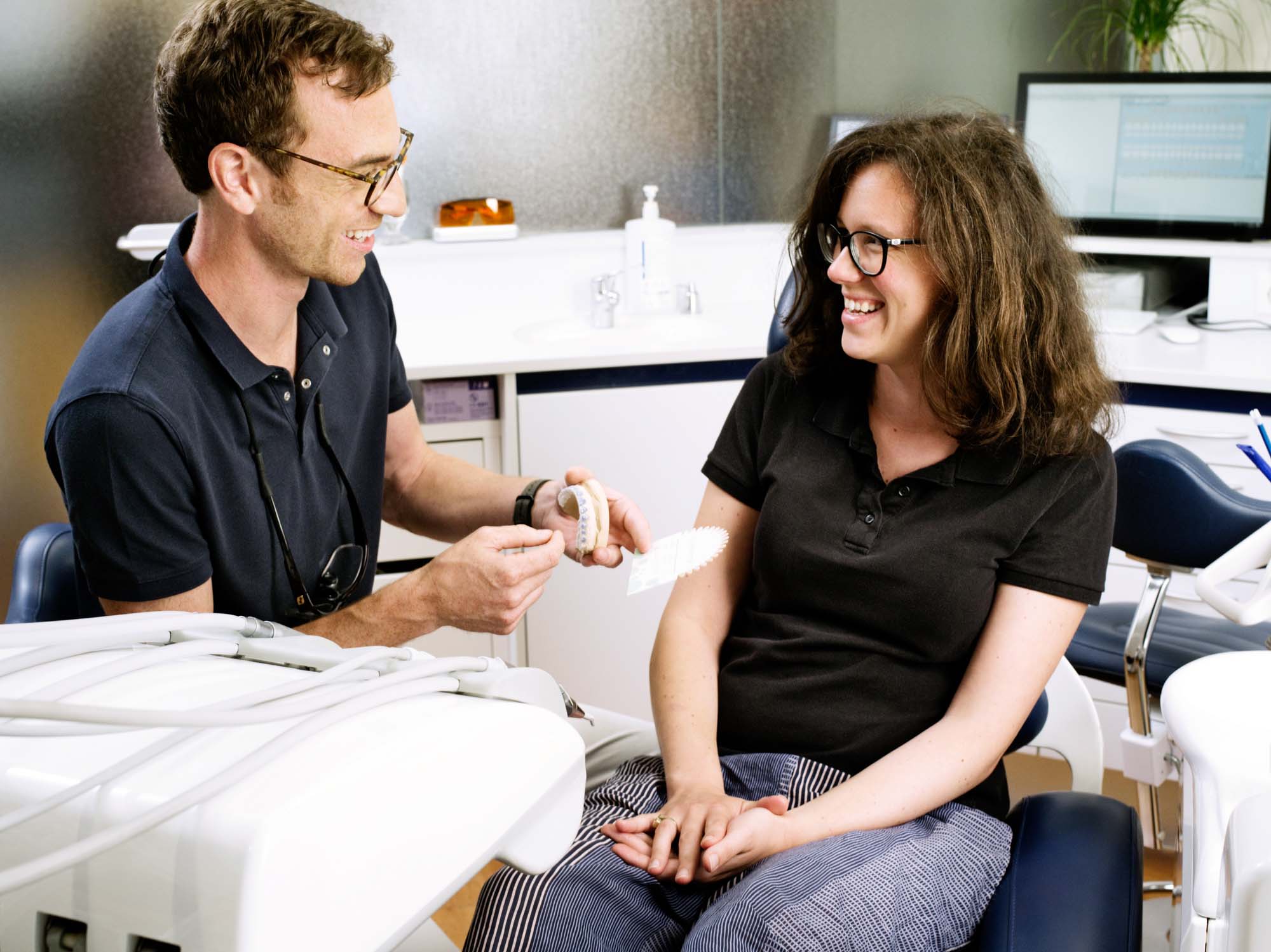
  1. Appointment: Before the treatment, a check-up of all teeth must be carried out (e.g. during a six-monthly check-up appointment). Sometimes a dental hygiene session (professional teeth cleaning) to remove superficial discoloration is also useful. Now impressions of your teeth are taken for the production of bleaching trays.
  2. Appointment: The individually manufactured bleaching trays are handed over. You will receive precise instructions on how to use them overnight.
  3. Appointment: After the desired tooth color has been achieved, a follow-up examination takes place. If necessary, appointments can be made to adapt old discolored fillings or crowns to the new tooth color.

Even individual teeth discolored by root canal treatment can be lightened.

If teeth whitening alone is not sufficient, for example due to damaged tooth substance, many fillings in the front teeth or an inharmonious tooth position, ceramic veneers are also an option to restore a harmonious smile.
Bleaching Methoden

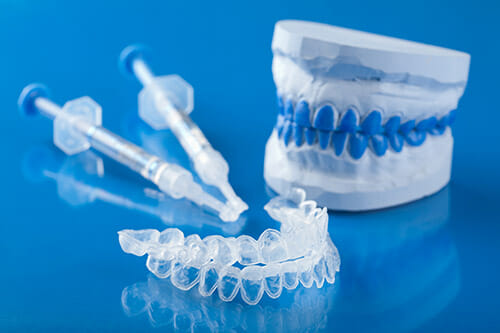
  • In this procedure, precisely fitting, transparent plastic trays are produced by the dental technician.
  • These are filled by the patient themselves with a special bleaching gel and worn at night.
  • The patient can choose the degree of whitening themselves and interrupt the treatment at any time.
  • During the treatment, strongly coloring foods (coffee, tea, cola…) should be avoided.
  • Due to the relatively low-dosed bleaching gel, this variant is to be regarded as very gentle when used correctly.
Home-Bleaching trays
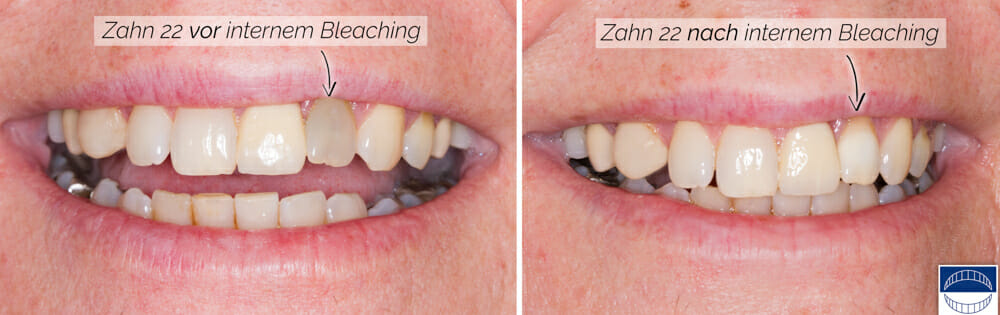
  • A gray-black discoloration of the inside of the tooth is often the result of root canal treatment, because small amounts of blood enter the tooth.
  • Procedure: The bleaching agent is placed inside the tooth and remains there for 1 – 2 days. In the meantime, the patient can walk around with the tooth to be bleached (“walking bleach”). Once the desired tooth color has been achieved, the gel is removed and the tooth is tightly sealed again.
  • It is important that the root canal treatment is absolutely tight – this is checked beforehand.
Bleaching of a root canal treated tooth, patient case
  • The treatment takes place directly in the practice, possibly also with the use of special bleaching lamps.
  • The risk of side effects (hypersensitivity, surface changes to the tooth enamel) is higher due to the use of more intensely dosed bleaching substances and bleaching lamps. Therefore, we do not currently offer office bleaching in our practice.

Our bleaching products

We use high-quality products that are clinically and scientifically tested. Additives ensure that the outer layers of the teeth are remineralized during application. (more information).

We also avoid bleaching lamps, as these have no proven benefit and even pose a risk to the teeth (see EU recommendation).

“White and healthy teeth are a symbol of youthfulness and health. As a dentist, my commitment is therefore to enable you to have white teeth with optimal dental methods. I would be happy to advise you.”
Dr. med. dent. Lukas Rudolf

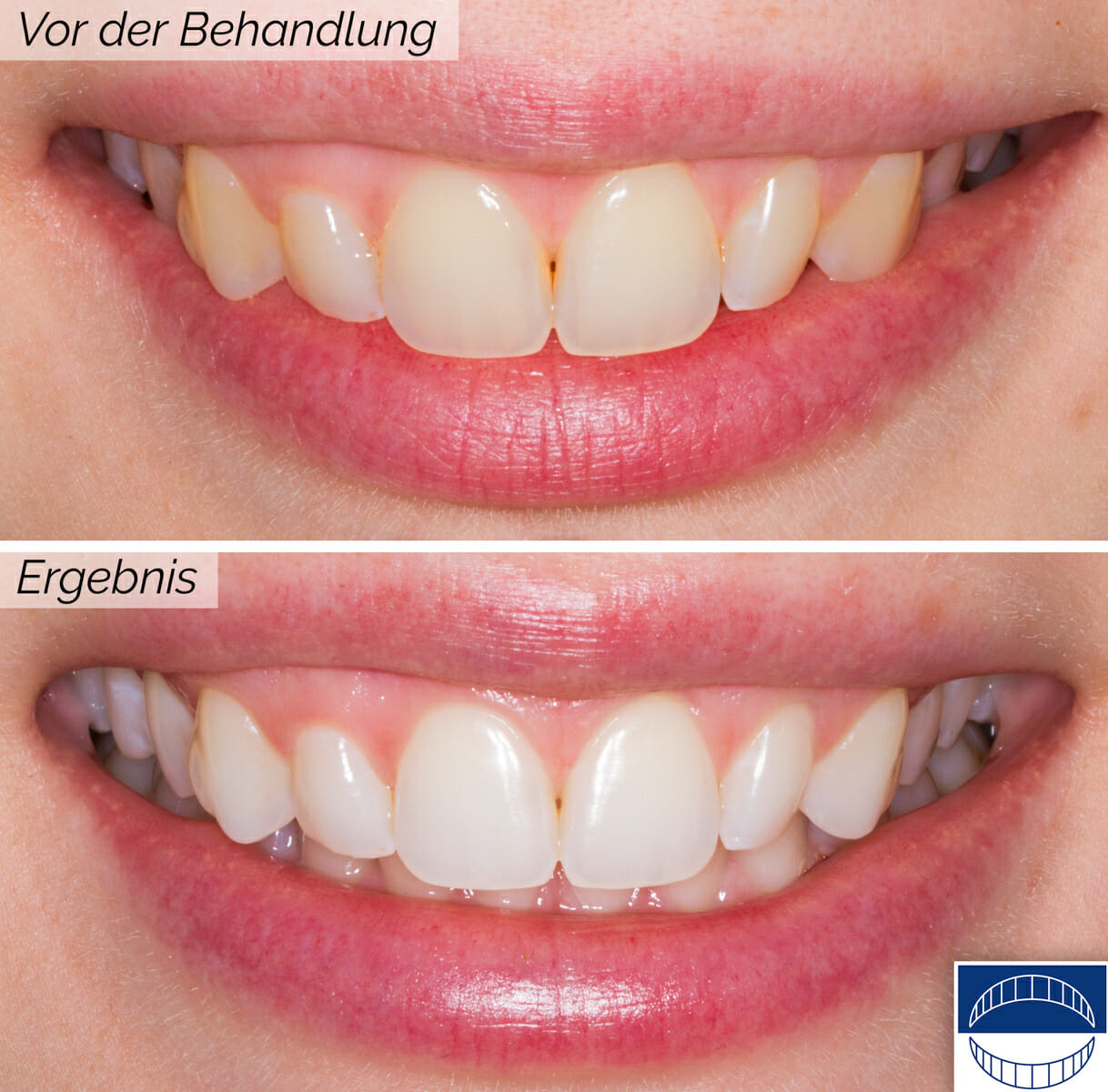
Bleaching before and after photo
Result of a patient in our practice

Fragen und Antworten

F :

Werden meine Zähne durch Bleaching geschwächt? Ist Bleaching schädlich?

A :

Nein, bei Anwendung auf gesunden Zähnen ist medizinisches Bleaching sicher und wissenschaftlich gut dokumentiert.

Zusätzlich erhalten Bleaching-Produkte, die in unserer Ordination zur Anwendung kommen, Kaliumnitrat und Fluorid (PF). Diese bewirken eine Remineralisation des Zahnschmelzes während des Bleaching-Vorgangs.

Dennoch gilt es zu beachten, dass undichte Kronenränder, alte undichte Füllungen oder Risse im Zahnschmelz ein erhöhtes Eindringen des Bleaching-Gels fördern können und der Zahnnerv gereizt werden kann. Daher ist eine gründliche Inspektion der Zähne, z.B. bei einem Kontroll-Termin eine wichtige Voraussetzung.

F :

Gibt es Nebenwirkungen?

A :

Bei richtiger Durchführung gibt es nur eine bekannte Nebenwirkung: eine vorübergehende erhöhte Sensibilität auf Kälte/Wärme (z.B. kalte Luft), die nach einigen Stunden bis Tagen wieder verschwindet.

Der Zahnschmelz ist nach einer Bleaching-Sitzung vorübergehend oberflächlich verändert, durch Remineralisierung gewinnt der Zahnschmelz jedoch nach ein paar Tagen wieder seine normale Struktur und Härte zurück.

F :

Wie funktioniert professionelles Bleaching?

A :

Es finden 2 Substanzen Anwendung: Wasserstoffperoxyd bzw. Carbamidperoxid. Je nach Methode (Office-Bleaching oder Home-Bleaching) wird dieses unterschiedlich dosiert. Durch eine chemische Reaktion werden Sauerstoff-Radikale gebildet, welche Farbpartikel im Schmelz entfärben. Home-Bleaching ist durch die niedriger dosierte Anwendung schonender für den Zahnschmelz als Office-Bleaching.

F :

Wie lange bleiben meine Zähne weiß?

A :

Die Haltbarkeit beträgt nach unserer Erfahrung viele Jahre. Genau hängt sie jedoch von individuellen Faktoren (Rauchen, Konsum stark färbender Lebensmittel, Kaffee und Tee) ab. Regelmäßige professionelle Zahnreinigung verlängert die Wirkung, da oberflächliche Verfärbungen mittels Politur entfernt werden.

Tipp bei ``Home-Bleaching``: Bleichgel zum ``Auffrischen`` ihrer Zahnfarbe können Sie gerne bei uns bestellen. So bleiben Ihre Zähne nachhaltig weiß.

F :

Wieviel kostet die Behandlung?

A :

Krankenkassen übernehmen die Kosten einer Zahnaufhellung nicht, da es eine kosmetische Behandlung darstellt. Wir ersuchen daher um eine Terminvereinbarung für eine Beratung, Kontrolluntersuchung sowie genaue Auskunft über die Kosten.