14Jan, 26
Root canal retreatment We perform microscopic root canal retreatment – a tooth-preserving measure – in our practice in Vienna.
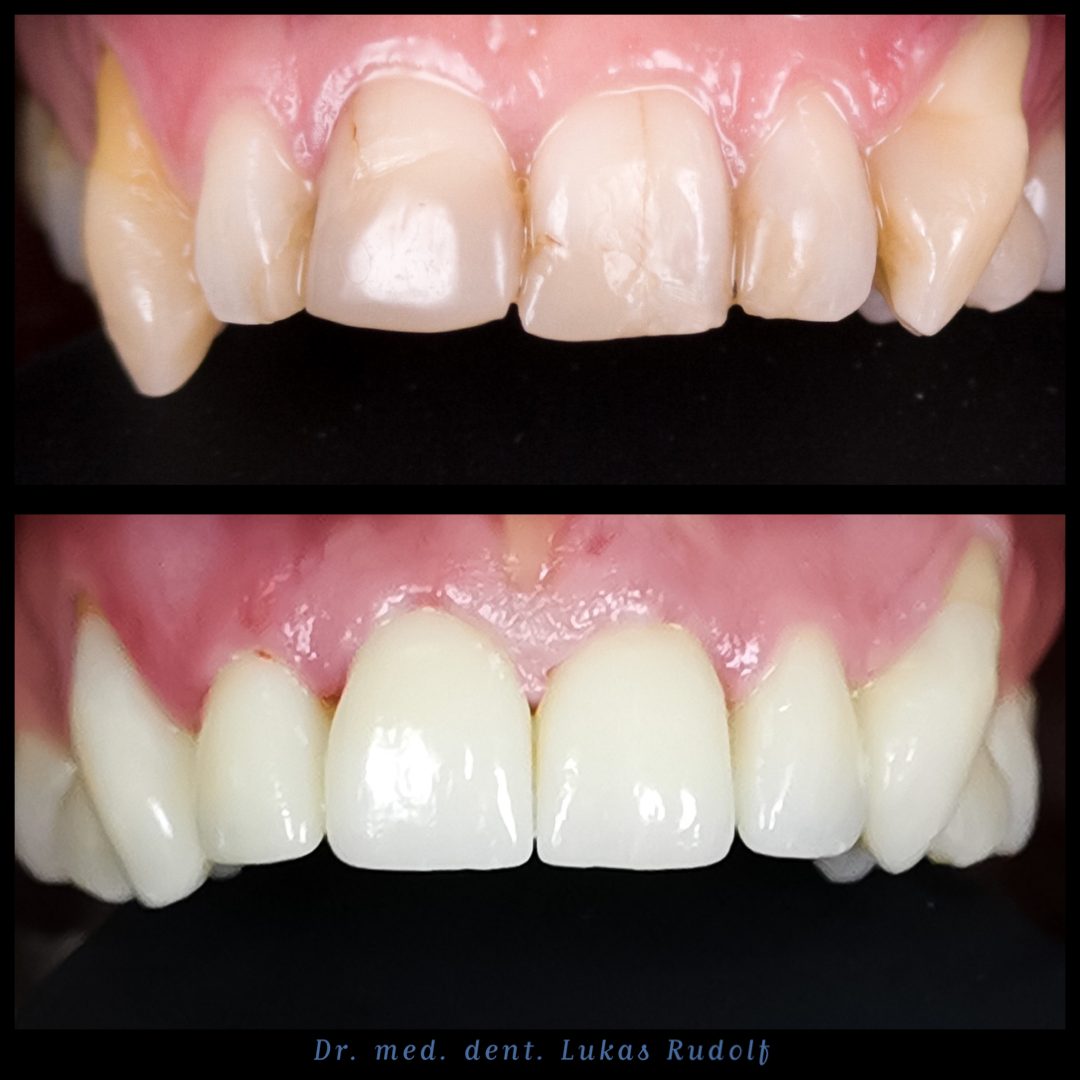
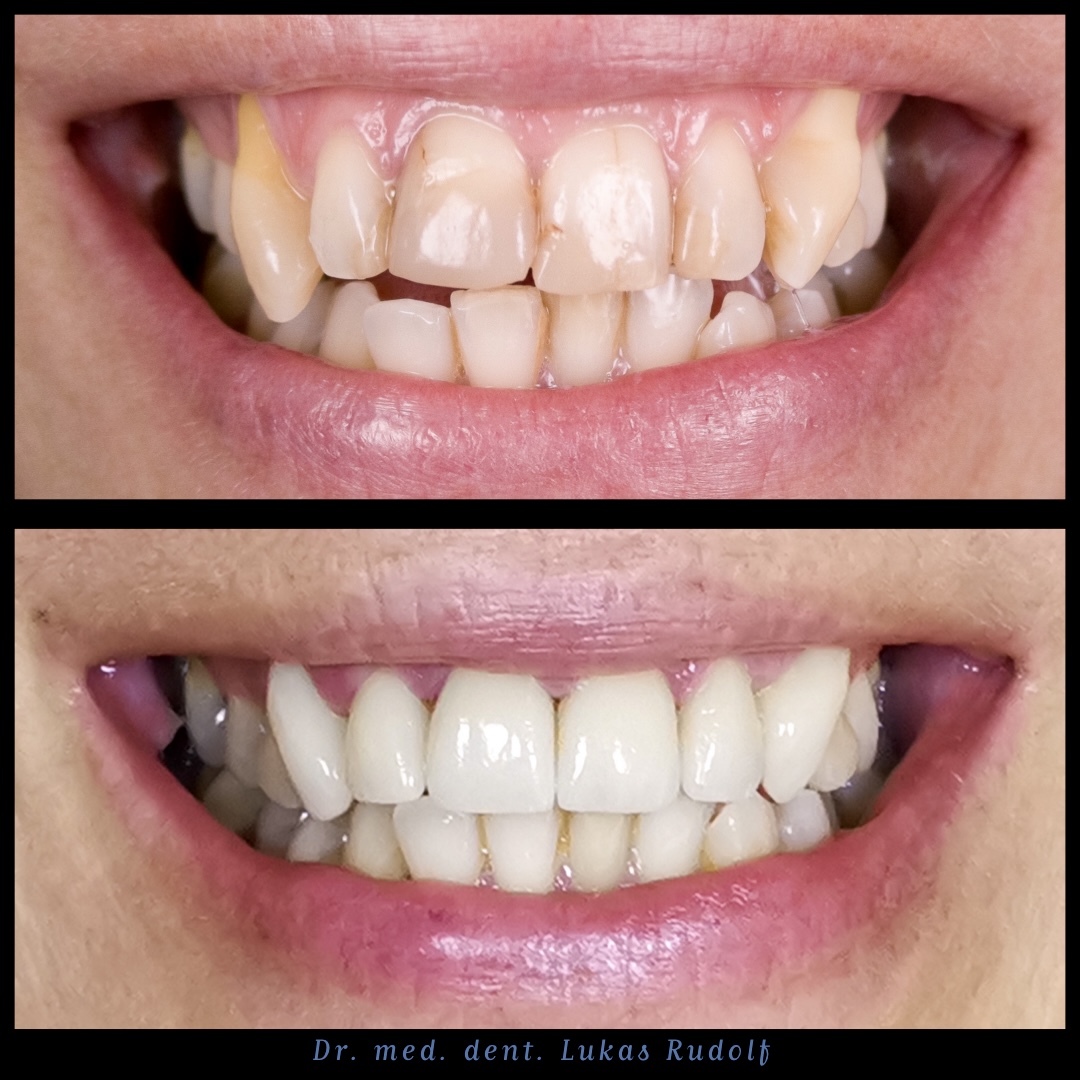
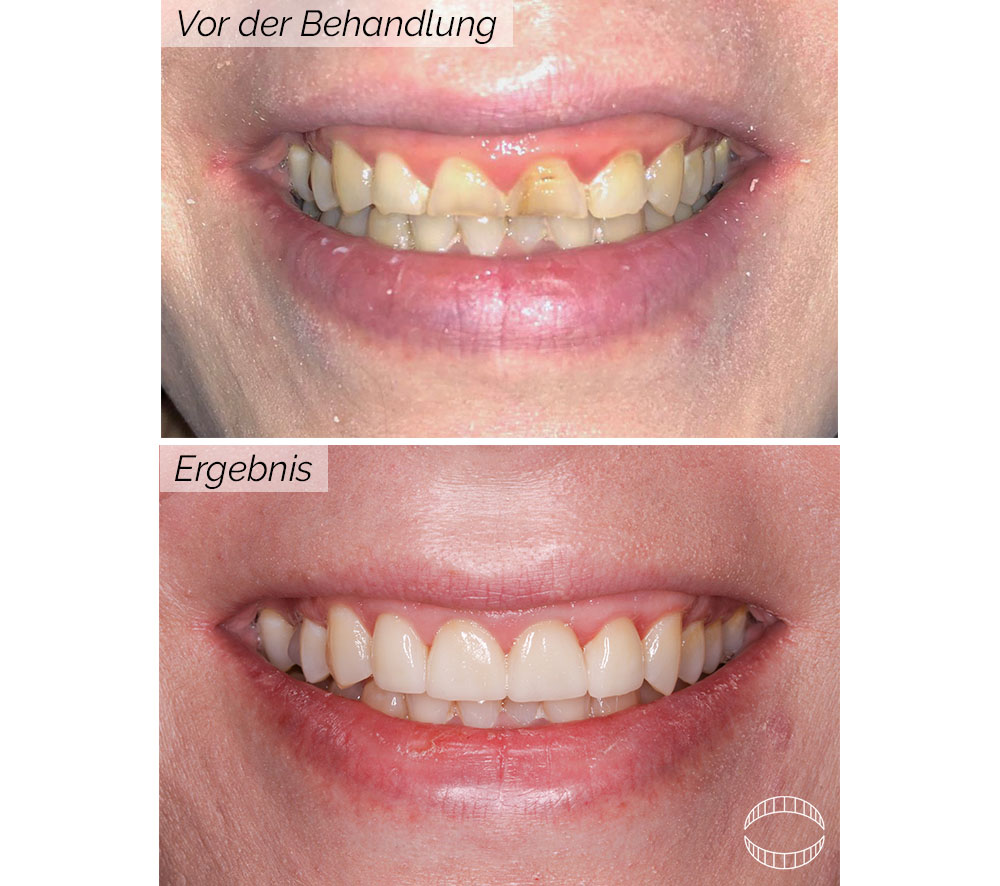
Dental crowns are necessary if a tooth is extensively damaged or weakened by root canal treatment. Both the appearance and function of the tooth can be restored in the best possible way with this individual precision work.
Modern all-ceramic crowns are made of completely biocompatible ceramic that can hardly be distinguished from a natural tooth.
The type of ceramic used for each tooth is individual. Extensively damaged teeth in the posterior region are “saved” with a high-strength ceramic (zirconium oxide), which is also used for ceramic implants. Teeth that have to withstand less stress, on the other hand, are treated with an aesthetically perfect all-ceramic (lithium disilicate) or, in the case of anterior teeth, even a wafer-thin veneer (see veneers).
It is decided on an individual basis whether a ceramic crown or a ceramic inlay (smaller) is necessary, e.g. depending on the degree of destruction of a tooth.
Thanks to our in-house dental laboratory, we can produce ceramic restorations precisely, true to nature and quickly. The unpopular silicone impression is eliminated by a digital scan of your teeth. Furthermore, we can produce ceramic crowns in our laboratory within 24 hours, in simple cases even within a day.
This is the hardest ceramic and is used for lateral molars and ceramic bridges.
Glass ceramic, especially lithium disilicate ceramic, is also very hard (harder than natural tooth enamel) and offers a higher aesthetic appeal than zirconium oxide due to its slight translucency. Glass ceramics are preferably used in the visible area (anterior teeth).
As an example of newer developments, hybrid ceramic is more flexible than the variants mentioned above and is therefore particularly useful for people who grind their teeth. The strength is approximately the same as that of a natural tooth.
Thanks to a latest-generation intraoral scanner, an unpleasant impression with an impression tray is usually no longer necessary. After just a few minutes, the tooth to be restored is “scanned” and the dentist designs it three-dimensionally on the computer. The ceramic inlay is then milled in our practice and designed to be highly aesthetic. You will receive the finished restoration either on the same day or a few days later.
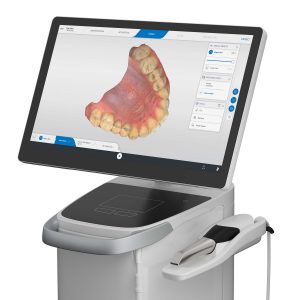
Scanning instead of impressions, using an intraoral scanner.